Text

ĐỒ ÁN

Tổng hợp các đồ án mẫu dành cho sinh viên chuyên ngành xây dựng.

DRAWING LIBRARY

Bộ sưu tập các bản vẽ mẫu Autocad,Revit,Max các biệt thự,chung cư và các công trình dân dụng khác.

DISSCUS

Cùng nhau thảo luận những chủ đề liên quan đến xây dựng

GALLERY

Kho Sách Nói Audio Book,Hình ảnh,Video dùng cho giải trí

YÊU CẦU TÀI LIỆU

Để lại yêu cầu về tài liệu mà bạn đang cần.Nếu được,tài liệu sẽ gửi đến bạn sớm nhất có thể.

NOTE Đóng lại
Hiển thị các bài đăng có nhãn FOUNDATION. Hiển thị tất cả bài đăng

Chủ Nhật, 22 tháng 4, 2012

[Foundation] Basics of Foundation Design-Bengt Fellenius


This book, written by one of the acknowledged greats of geotechnical engineering, presents a background to conventional foundation analysis and design. The text concentrates on the static design for stationary foundation conditions, and intends to present most of the basic material needed for a practicing engineer involved in routine geotechnical design. It emphasises two main aspects of geotechnical analysis, the use of effective stress analysis and the understanding that the vertical distribution of pore pressures in the field is fundamental to the relevance of any foundation design. Additionally the text covers cone peneration testing, settlement of foundations, vertical drains, earth stress, bearing capacity of shallow foundations, static analysis of pile load transfer and analysis of the static load test, pile dyanmics, and piling terminology. Also included are worked examples and specifications and dispute avoidance.

Thứ Hai, 21 tháng 11, 2011

Deep Foundation Design.


Description:


Chapter 1
Introduction
Purpose
Applicability
Scope
References
General Design Methodology
Types of Deep Foundations
Selection of Deep Foundations
Site and Soil Investigations


Chapter 2
Design Stresses
Constraints
Factored Loads
Structural Design of Driven Piles
Structural Design of Drilled Shafts


Chapter 3
Vertical Loads
Design Philosophy
Driven Piles
Drilled Shafts


Chapter 4
Lateral Loads
Description of the Problem
Nonlinear Pile and p-y Model for Soil
Development of p-y Curve for Soils
Analytical Method
Status of the Technology


Chapter 5
Pile Groups
Design Considerations
Factors Influencing Pile Group Behavior
Design for Vertical Loads
Design for Lateral Loads
Computer Assisted Analysis


Chapter 6
Verification of Design
Foundation Quality


(Click SKIP AD to download.Sorry for this inconvinient.)
Thank you for your attention.

Foudation Design Group (Excel file)


1 Free Standing Wall Free Standing Masonry & Conctere Wall Design Based on TMS 402-08 & ACI 318-08
2 Eccentric Footing Eccentric Footing Design Based on ACI 318-08
3 Flagpole Flagpole Footing Design Based on Chapter 18 of IBC & CBC
4 Masonry Retaining Wall Masonry Retaining / Fence Wall Design Based on TMS 402-08 & ACI 318-08
5 Concrete Retaining Wall Concrete Retaining Wall Design Based on ACI 318-08
6 Masonry-Concrete Retaining Wall Retaining Wall Design, for Masonry Top & Concrete Bottom, Based on TMS 402-08 & ACI 318-08
7 Concrete Pier Concrete Pier (Isolated Deep Foundation) Design Based on ACI 318-08
8 Concrete Pile Drilled Cast-in-place Pile Design Based on ACI 318-08
9 Pile Caps Pile Cap Design for 4, 3, 2-Piles Pattern Based on ACI 318-08
10 Pile Cap Balanced Loads Determination of Pile Cap Balanced Loads and Reactions
11 Conventional Slab on Grade Design of Conventional Slabs on Expansive & Compressible Soil Grade Based on ACI 360
12 PT-Slab on Ground Design of PT Slabs on Expansive & Compressible Soil Based on PTI 3rd Edition
13 Basement Concrete Wall Basement Concrete Wall Design Based on ACI 318-08
14 Basement Masonry Wall Basement Masonry Wall Design Based on TMS 402-08
15 Basement Column Basement Column Supporting Lateral Resisting Frame Based on ACI 318-08
16 MRF-Grade Beam Grade Beam Design for Moment Resisting Frame Based on ACI 318-05
17 Brace Grade Beam Grade Beam Design for Brace Frame Based on ACI 318-08
18 Grade Beam Two Pads with Grade Beam Design Based on ACI 318-08 & AISC 360-05
19 Circular Footing Circular Footing Design Based on ACI 318-08
20 Combined Footing Combined Footing Design Based on ACI 318-08
21 Boundary Spring Generator Mat Boundary Spring Generator
22 Deep Footing Deep Footing Design Based on ACI 318-08
23 Footing at Piping Design of Footing at Piping Based on ACI 318-08
24 Irregular Footing Soil Pressure Soil Pressure Determination for Irregular Footing
25 PAD Footing Pad Footing Design Based on ACI 318-08
26 Plain Concrete Footing Plain Concrete Footing Design Based on ACI 318-08
27 Restrained Retaining Wall Restrained Retaining Masonry & Concrete Wall Design Based on TMS 402 & ACI 318
28 Retaining Wall for DSA /OSHPD Retaining Wall Design Based on CBC 10 Chapter A
29 Tank Footing Tank Footing Design Based on ACI 318-08
30 Temporary Footing for Rectangular Tank Temporary Tank Footing Design Based on ACI 318-08
31 Under Ground Well Under Ground Well Design Based on ACI 350-06 & ACI 318-08
32 Stud Bearing Wall Footing Footing Design for Stud Bearing Wall Based on IBC 09 / ACI 318-08
33 Wall Footing Footing Design of Shear Wall Based on ACI 318-08
34 Fixed Moment Condition Fixed Moment Condition Design Based on ACI 318-08
35 Flood Way Concrete Floodway Design Based on ACI 350-06 & ACI 318-08
36 Lateral Earth Pressure Lateral Earth Pressure of Rigid Wall Based on AASHTO 17th & 2009 IBC
37 Shoring Sheet Pile Wall Design Based on IBC 09 / CBC 10 / ACI 318-08
38 Composite Element Durability Composite Element Design Based on AISC 360-05 & ACI 318-08

Share with you all of my excel files which I collected.Leave me your comment below if the links have problems.
Enjoy it!

Source:  www.engineering-international.com

Chủ Nhật, 20 tháng 11, 2011

METHODS OF RAFT FOOTING DESIGN

According to IS – 2950:1965, the design criteria of raft footings are given below:
The maximum differential settlement in foundation on clayey soils and sandy soils should not exceed 40mm and 25 mm respectively. The maximum settlement should generally be limited to the following values:
Raft foundation on clay – 65 to 100 mm.
Raft foundation on sand – 40 to 65 mm.


There are two methods for the design of raft foundations. They are:
1) Conventional Method
2) Soil Line Method.
1. Conventional Method
Assumptions:
1. The soil pressure is assumed to be plane such that the centroid of the soil pressure coincides with the line of action of the resultant force of all the loads acting on the foundation.
2. The foundation is infinitely rigid and therefore, the actual deflection of the raft does not influence the pressure distribution below the raft.
In this method, allowable bearing pressure can be calculated by the following formulae:


Where clip_image007 and clip_image009 = allowable soil pressure under raft foundation in clip_image011 (use a factor of safety of three). The smaller values of clip_image007[1] and clip_image009[1]should be used for design.
clip_image013and clip_image015= reduction factor on account of subsoil water.
N = penetration resistance.
If the values of N is greater than 15 in saturated silts, the equivalent penetration resistance should be taken for the design. The equivalent penetration resistance can be determined by the formula:

The pressure distribution (q) under the raft should be calculated by the following formula:

Where Q = total vertical load on raft
x, y = co-ordinates of any given point on the raft with respect to the x and y axes passing through the centroid of the area of the raft.
A = total area of the raft.
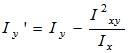
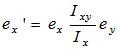
clip_image021= eccentricities about the principal axis passing through the centroid of the section.
clip_image023 = moment of inertia about the principal axis through the centroid of the section.
clip_image021[1],clip_image023[1] can be calculated by the following equations:
clip_image025
clip_image027
clip_image029
clip_image031
Where clip_image033and clip_image035= eccentricities in x and y direction of the load from the centroid.
clip_image037and clip_image039= moment of inertia of the area of the raft respectively about the x and y axes through the centroid.
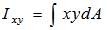
clip_image041 for the whole area about x and y axes through the centroid.

2) Soil line Method (Elastic Method)

A number of methods have been proposed based on primarily on two approaches of simplified and truly elastic foundations.
i. Simplified elastic foundation: The soil in this method is replaced by an infinite number of isolated springs.
ii. Truly elastic foundation: The soil is assumed to be continuous elastic medium obeying Hooke’s law.
In the case of foundation which is comparatively flexible and where loads tend to concentrate over small areas these methods are to be used. The method assumes in addition to other factors that the modulus of subgrade reaction, determined from tests is known. The modulus of subgrade reaction (clip_image043) as applicable to the case of load through a plate of size 30 cm x 30 cm or beams 20 cm wide on soil area is given in table-1 for cohesionless soils and table-2 for cohesive soils.
Table -1: Modulus of subgrade reaction clip_image043[1] for cohesionless soils
Soil Characteristics
clip_image002
Relative Density
Values of N
Dry or moist state
Submerged state
1. Loose
<10
1.5
0.9
1. Medium
10 to <30
4.7
2.9
3. Dense
30 and over
18
10.8

Table – 2: Modulus of subgrade reaction clip_image002 for cohesive soils

Soil Characteristics
clip_image004
Consistency
Unconfined compressive

 Strength (clip_image006)

1. Stiff
1 to <2
2.7
1. Very Stiff
2 to <4
5.4
3. Hard
4 and over
10.8

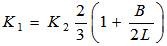
The above values of clip_image002[6] are corresponding to a square plate of size 30 cm x 30 cm. To find the values of K corresponding to different sizes and shapes, the following relationships to be used.
(a) Effect of size
clip_image004[3] for cohesionless soil
clip_image006[3] for cohesive soils.
Where, K = modulus of subgrade reaction for footing of width B cm
clip_image002[7] = modulus of subgrade reaction for a square plate of width 30cm x 30cm
K’ = modulus of subgrade reaction for footing of width clip_image008cm.
(b) Effect of shape
clip_image010 for cohesive soils
Where clip_image012= modulus of subgrade reaction for a rectangular footing having length L and width B.
clip_image014= modulus of subgrade reaction for square footing of side B.
The effect of shape is negligible in the case of footing on cohesionless soils.

Source:Theconstructor.org

Thứ Tư, 9 tháng 11, 2011

Móng cọc–Phân tích và thiết kế (Vũ Công Ngữ)


Description:

Ở nước ta những năm gần đây đã có khá nhiều sách về nền móng công trình được xuất bản. Tuy nhiên, các thông tin mới về thiết kê nền và móng lại được trình bày rải rác và chưa đầy đủ. Cuốn sách này tập hợp khá kỹ lưỡng các kiến thức mới về móng cọc, như các phương pháp mới dự án báo sức chịu tải của cọc, đặc biệt là cọc nhồi; phương pháp tính toán đồng thời cọc - nền đất; các phương pháp thí nghịem cọc (thí nghiệm PDA, Osterberg, Statnamic). Hy vọng rằng cuốn sách này sẽ bổ ích cho các kỹ sư tư vấn và học viên cao học ở Việt Nam.

Mục lục:

Lời nói đầu

Kí hiệu

Chương 1: Tổng quan về móng cọc

Chương 2: Cọc chế sẵn

Chương 3: Cọc nhồi

Chương 4: Tính toán cọc làm việc đồng thời với nền

Chương 5: Một số phương pháp thí nghiệm cọc

Chương 6: Lựa chọn giải pháp móng cọc

Phụ lục 1: Tính nén lún và sức chống cắt của đất

Phụ lục 2: Một số yếu tố ảnh hưởng đến sức chịu tải của cọc

Phụ lục 3: Một số phương trình xấp xỉ

Phụ lục 4: File số liệu các ví dụ GRL-WEAP

Tài liệu tham khảo.

Mời bạn đón đọc.


Click SKIP AD to download,Sorry for this inconvinient.Tks.

Twitter Delicious Facebook Digg Stumbleupon Favorites More